
Why People Ignore QR Codes (And How to Make Yours Worth Scanning)
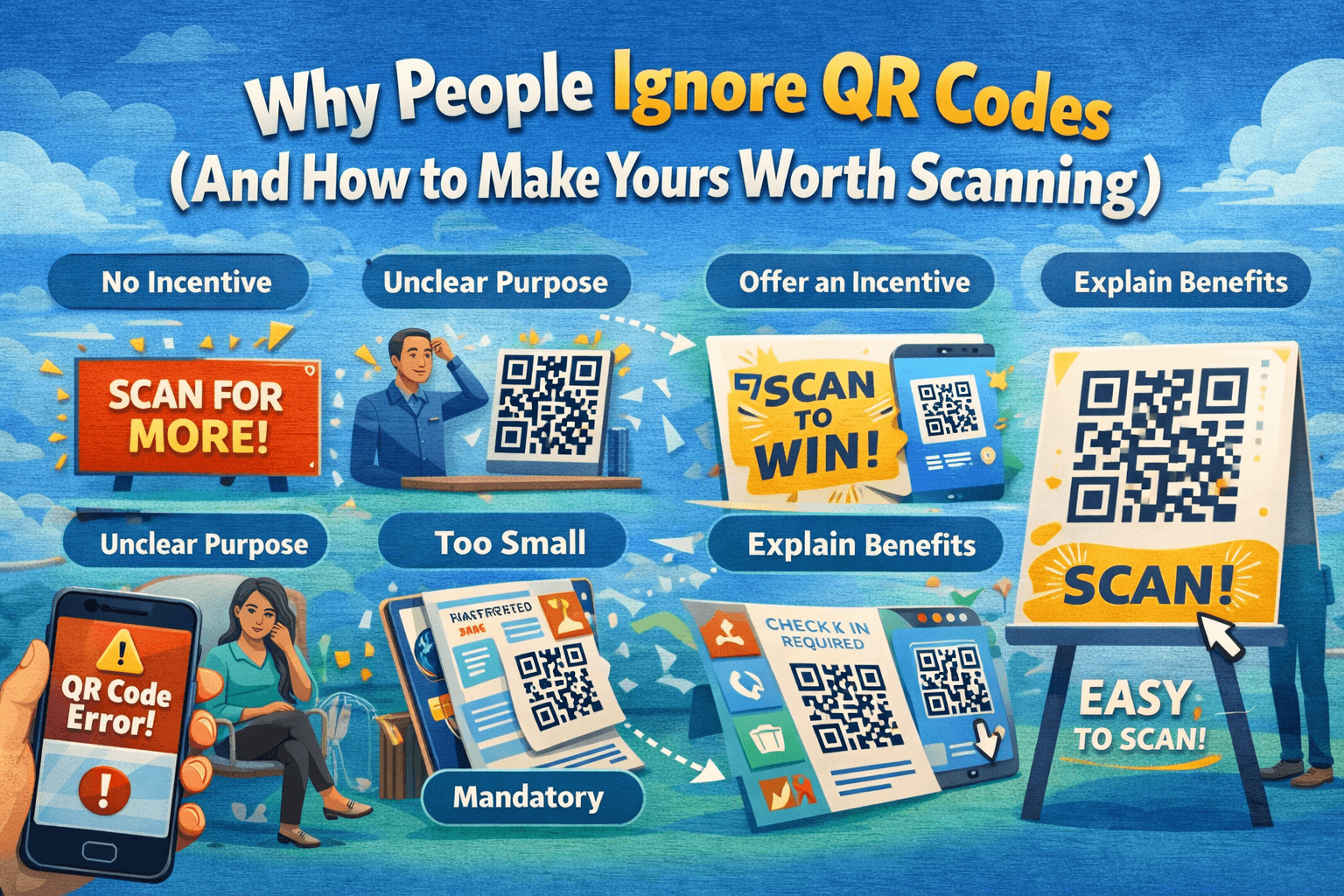
Most QR codes don’t fail because they’re broken.
They fail because people decide, in a split second, that scanning them isn’t worth the effort.
That decision usually has nothing to do with the technology and everything to do with expectations.
People Scan QR Codes With a Question in Mind
When someone sees a QR code, their brain immediately asks one thing:
What will I get if I scan this?
If the answer isn’t obvious, the scan usually doesn’t happen.
QR codes work best when the value is immediately clear. When they don’t communicate purpose, they blend into the background and get ignored.
Generic Destinations Kill Interest
One of the fastest ways to lose someone’s attention is sending them to a generic page.
If a QR code relates to a menu, people expect a menu.
If it relates to a product, they expect product details.
If it relates to an event, they expect event information.
Landing on a homepage forces users to think, search, and guess — and most won’t bother.
Friction Is the Enemy of Scanning
Scanning feels effortless only when everything works smoothly.
Small details can quietly add friction:
-
QR codes that are too small
-
Low contrast with the background
-
Placement that requires awkward positioning
If scanning feels inconvenient, people skip it without thinking twice.
Uncertainty Creates Hesitation
A QR code without explanation feels risky.
People don’t like surprises when it comes to their phone. A short line of text explaining the outcome removes that hesitation.
“Scan to view the menu.”
“Scan for more details.”
“Scan to leave feedback.”
Clarity builds confidence.
The Experience After the Scan Matters More Than the Scan
QR codes are scanned on mobile devices. If the page loads slowly, looks cluttered, or is hard to read on a phone, the experience ends immediately.
From the user’s perspective, the QR code and the page it opens are the same thing. A bad landing page makes the entire QR code feel pointless.
Outdated Links Break Trust
QR codes often live longer than expected.
They appear on signs, packaging, menus, and printed materials that stay in circulation for months or years. If the destination changes or disappears, the QR code quietly stops working.
Once someone encounters a dead link, they’re less likely to scan again in the future.
QR Codes Without Feedback Are Guesswork
Many QR codes are added and then forgotten.
Without knowing how often they’re scanned or what users do afterward, there’s no way to improve the experience. Even basic tracking can reveal whether a QR code is actually useful or just taking up space.
The QR Code Isn’t the Hard Part
Creating a QR code takes seconds.
The real work happens before that: deciding what people should see, making sure the page works on mobile, and placing the code where scanning feels natural.
Once that’s done, generating the code itself is easy. A simple tool like
https://generate-qr-code.com
lets you create clean, scannable QR codes without overcomplicating anything.
Final Thoughts
People don’t ignore QR codes because they dislike them.
They ignore QR codes that feel unclear, inconvenient, or disappointing.
When QR codes clearly communicate value, respect the user’s time, and lead to a smooth experience, they get scanned. When they don’t, they fade into the background.
The difference isn’t technology — it’s expectations.

 English
 Arabic
 Spanish
 Portuguese
 Deutsch
 Turkish
 Dutch
Dutch
 Italiano
 Russian
 Romaian
 Portuguese (Brazil)
 Greek
Greek