
Practical QR Code Use Cases You See in Everyday Life
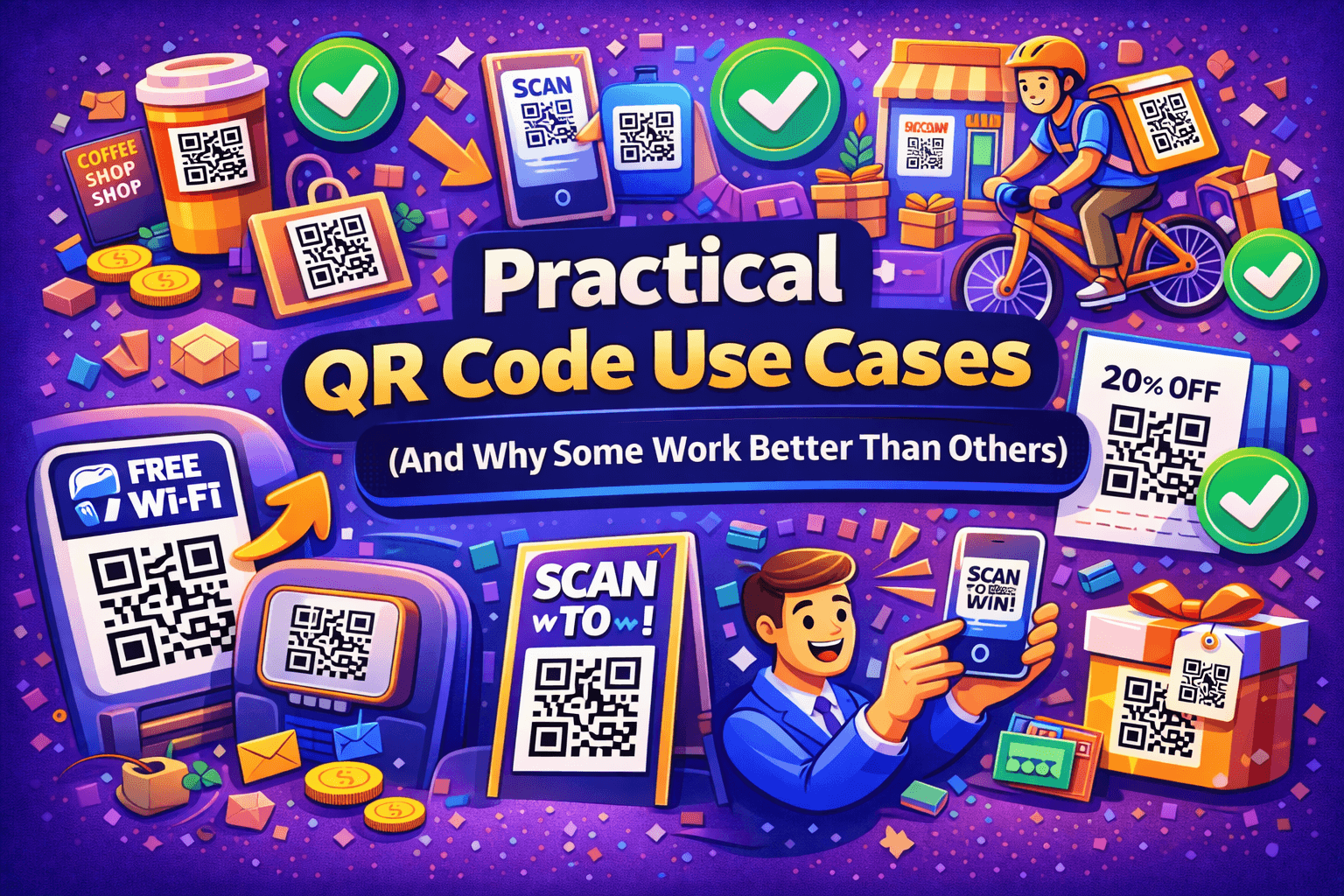
QR codes are everywhere, but not all of them feel useful. Some blend naturally into daily routines, while others feel unnecessary or forced. The difference isn’t the QR code itself — it’s how well the use case fits the moment.
Below are common real-world QR code use cases that work well, and the reasons they succeed.
Food and Hospitality
Restaurants and cafés are among the most effective users of QR codes.
Common applications include:
-
Digital menus
-
Daily specials
-
Online ordering
-
Ingredient or allergy details
Why this works
Menus change often, and customers expect quick access. QR codes remove printing costs and let guests get information instantly.
Events and Venues
QR codes are widely used in event settings where speed and clarity matter.
Typical uses:
-
Digital tickets
-
Entry check-ins
-
Event schedules
-
Maps and directions
Why this works
Attendees already have their phones out. Scanning saves time and reduces lines.
Product Packaging and Manuals
QR codes help extend packaging beyond its physical limits.
They’re often used to link to:
-
Setup instructions
-
User manuals
-
How-to videos
-
Support resources
Why this works
Not every customer needs extra information, but when they do, QR codes provide it instantly without cluttering packaging.
Retail and In-Store Information
In retail environments, QR codes often support purchasing decisions.
Common uses include:
-
Product specifications
-
Customer reviews
-
Size guides
-
Promotions or discounts
Why this works
Shoppers want information at the moment of decision. QR codes deliver it without relying on staff availability.
Education and Learning Materials
QR codes are frequently used in education to add depth to printed materials.
Examples include:
-
Linking textbooks to videos
-
Providing supplementary reading
-
Accessing exercises or quizzes
Why this works
QR codes let learners choose when to explore additional content without overwhelming the main material.
Networking and Professional Profiles
QR codes simplify sharing contact and professional information.
They’re commonly used to:
-
Save contact details
-
Open portfolios or resumes
-
Link to personal websites or profiles
Why this works
Scanning avoids typing errors and ensures information stays current.
Reviews and Feedback Collection
QR codes make it easier to collect feedback when experiences are fresh.
Typical uses:
-
Review platforms
-
Feedback forms
-
Short surveys
Why this works
Lower effort leads to higher participation, especially when timing is right.
Internal Business Operations
Not all QR codes are customer-facing.
Internal use cases include:
-
Inventory tracking
-
Equipment labeling
-
Accessing internal documents
-
Maintenance records
Why this works
QR codes provide fast, low-cost access to information without complex systems.
Why Some QR Code Use Cases Don’t Work
QR codes usually fail when:
-
There’s no clear reason to scan
-
The destination isn’t mobile-friendly
-
The content isn’t relevant to the moment
-
Scanning feels inconvenient
Successful QR codes always respect context and timing.
Choosing the Right QR Code Setup
Long-term or printed use cases often require flexibility.
Tools like QRColor help create QR codes that fit real-world scenarios while remaining easy to scan and manage.
You can see an example here:
👉 https://qrcolor.com

 English
 Arabic
 French
 Spanish
 Portuguese
 Deutsch
 Dutch
Dutch
 Italiano
 Russian
 Romaian
 Portuguese (Brazil)
 Greek
Greek