
Do Colored QR Codes Work? What Affects Scan Reliability
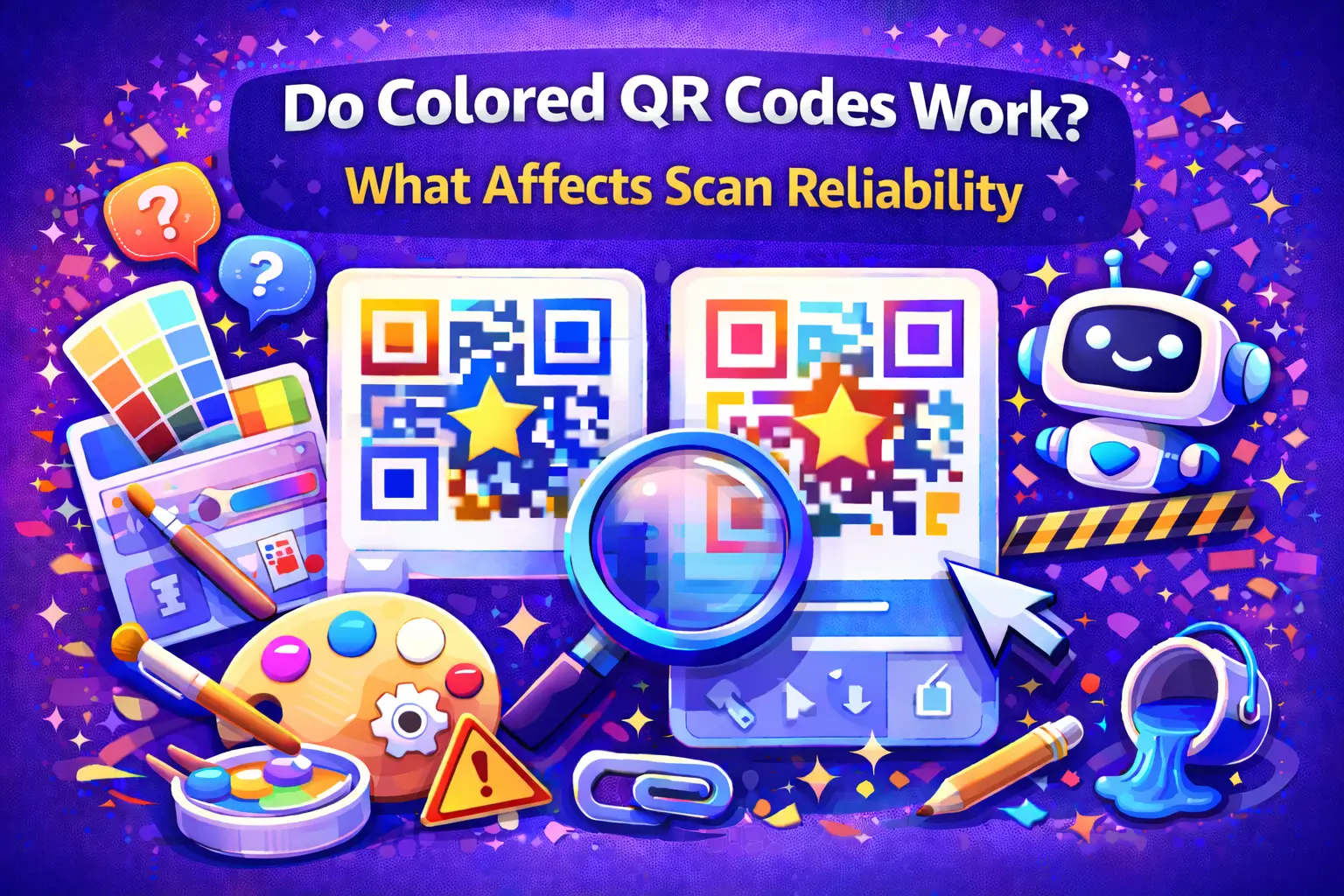
Colored QR codes are everywhere — on posters, packaging, menus, and marketing materials. They look more modern, more branded, and less technical than traditional black-and-white codes.
But many people hesitate before using them for one simple reason:
“Will a colored QR code still scan reliably?”
The short answer is yes — colored QR codes can work very well.
The longer answer depends on contrast, design choices, and how the code is used in the real world.
Yes, Colored QR Codes Do Work — If Done Correctly
QR codes don’t require black ink to function. Scanners don’t care about color; they care about contrast and structure.
A colored QR code will scan reliably when:
-
The code is clearly distinguishable from the background
-
The QR pattern remains visually sharp
-
The overall structure of the code is preserved
Most scanning failures blamed on “color” are actually caused by poor contrast or overdesign.
Contrast Is More Important Than Color
Contrast is the single most important factor in scan reliability.
What usually works
-
Dark-colored QR codes on light backgrounds
-
Solid, high-contrast color combinations
-
Simple backgrounds with no texture
What often fails
-
Light colors on light backgrounds
-
Low-contrast brand palettes
-
Busy or patterned backgrounds
A QR code that looks subtle or stylish on a screen may become unreadable in sunlight, low light, or at a distance.
Lighting and Environment Matter More Than You Think
A colored QR code that scans perfectly indoors may fail outdoors — or vice versa.
Environmental factors that affect scanning:
-
Bright sunlight causing glare
-
Low-light or uneven lighting
-
Reflections from glossy surfaces
-
Distance between scanner and code
The less contrast a QR code has, the more vulnerable it becomes to these conditions.
Printed vs Digital Colored QR Codes
Where the QR code appears also affects reliability.
Digital screens
-
Usually scan more easily
-
Offer consistent contrast and lighting
-
Are more forgiving with color
Printed materials
-
Depend on print quality
-
Are affected by paper texture and ink absorption
-
Require stronger contrast for safety
If a colored QR code will be printed, especially at small sizes, contrast becomes even more critical.
Logos and Colors Combined Increase Risk
Using color and adding a logo at the same time increases the chance of scan issues.
This doesn’t mean it can’t be done — it just means:
-
The logo should stay small
-
Error correction should be high
-
Testing becomes mandatory
Each design element removes a bit of tolerance from the QR code.
Safe Customization Practices
Colored QR codes work best when customization is intentional and restrained.
Good practices include:
-
Using dark brand colors instead of light ones
-
Keeping the background clean and uncluttered
-
Avoiding gradients or transparency
-
Testing before publishing or printing
Tools like QRColor are designed to support color customization while preserving scan reliability, making it easier to experiment safely.
You can explore safe customization options at 👉 https://qrcolor.com
Testing Is the Final Authority
No guideline replaces real-world testing.
Always test colored QR codes:
-
On multiple phones
-
With different camera apps
-
In different lighting conditions
-
At the final size and distance
If scanning feels slow or inconsistent, increase contrast or simplify the design.
When You Should Avoid Colored QR Codes
There are situations where color adds unnecessary risk.
Avoid colored QR codes when:
-
The code is very small
-
It will be scanned from far away
-
Lighting conditions are unpredictable
-
Reliability matters more than branding
In these cases, simple black-and-white QR codes remain the most reliable option.
Final Thoughts
Colored QR codes absolutely work — but only when contrast, environment, and design are respected.
Most scan failures aren’t caused by color itself, but by poor contrast and overdesign. When colored QR codes are designed thoughtfully and tested properly, they can look on-brand and scan just as reliably as traditional ones.
If the goal is instant scanning, clarity always wins over style.

 English
 Arabic
 Spanish
 Portuguese
 Deutsch
 Turkish
 Dutch
Dutch
 Italiano
 Russian
 Romaian
 Portuguese (Brazil)
 Greek
Greek