
Are QR Codes Safe? What Users Should Know Before Scanning
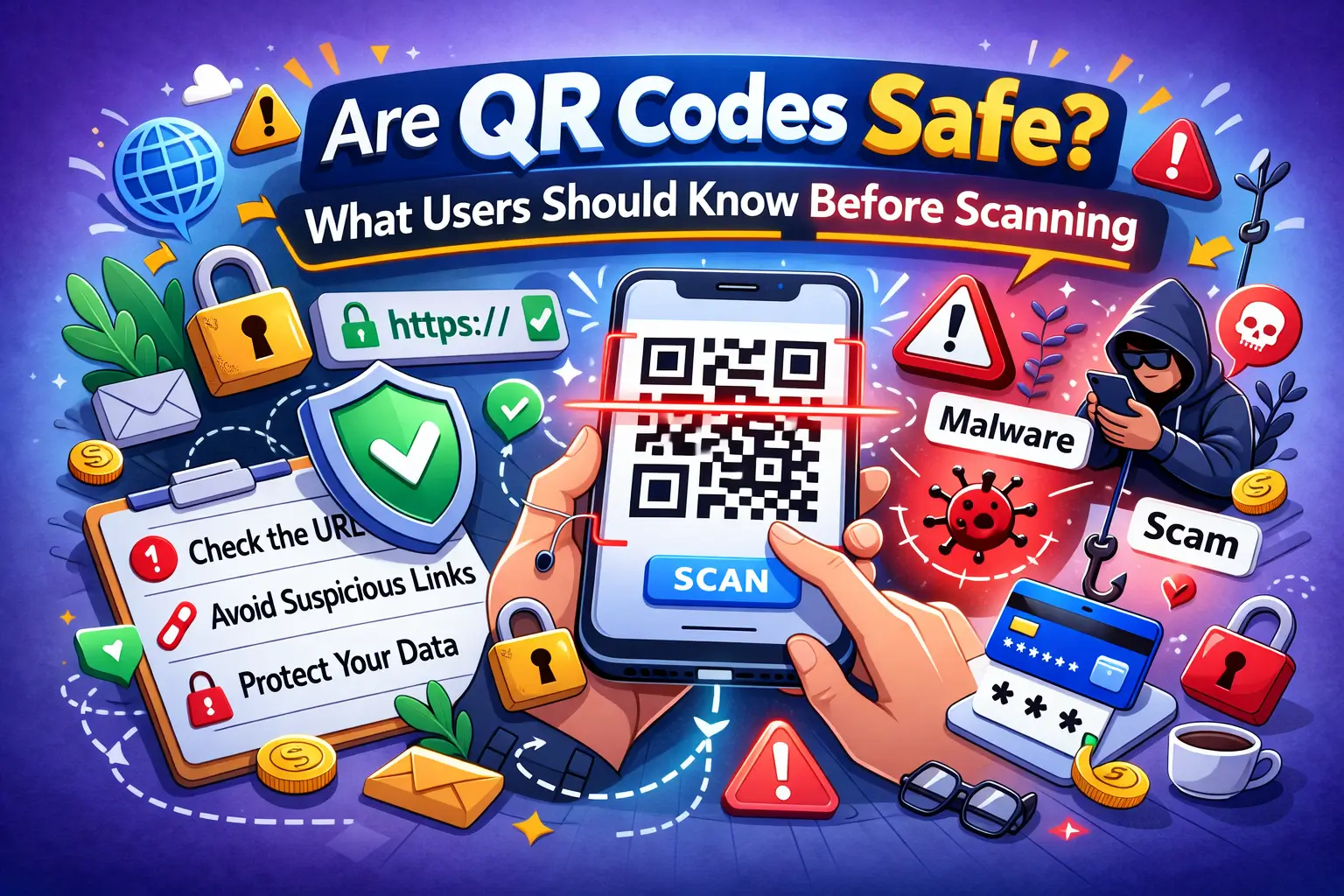
QR codes have quietly become part of daily life. You scan them to view restaurant menus, access websites, download apps, join Wi-Fi networks, or complete payments within seconds.
Because they work so quickly, many people ask an important question:
Are QR codes safe to scan?
The honest answer is yes — QR codes are generally safe, but understanding how they work helps you avoid the rare situations where problems can occur.
QR Codes Themselves Are Not Dangerous
A QR code is simply a visual storage format for information. Think of it as a shortcut that saves you from typing a long web address.
When scanned, a QR code may contain:
-
A website URL
-
Contact information
-
A file download
-
Event details
-
Payment instructions
-
Wi-Fi access data
The key point is this:
a QR code does not harm your phone on its own.
It only tells your device where to go or what action to perform.
The Real Risk Comes From the Destination
The safety concern isn’t the QR code image — it’s the link behind it.
Just like suspicious links in emails or text messages, malicious QR codes can sometimes redirect users to unsafe websites. This is often referred to as QR phishing.
Examples include:
-
Fake login pages designed to steal credentials
-
Scam payment portals
-
Websites requesting personal information
-
Misleading download pages
Since QR codes hide URLs until scanned, users may trust them without checking first.
How to Scan QR Codes Safely
You don’t need special apps or technical knowledge to stay safe. A few simple habits make QR code scanning very low risk.
Check the link preview
Most smartphones show the destination link before opening it. Take a moment to confirm:
-
The domain name looks legitimate
-
The brand matches the environment
-
The address uses secure HTTPS connections
If something feels off, don’t continue.
Be cautious with public QR codes
One known scam involves placing fake QR stickers over real ones.
This can happen in places like:
-
Parking meters
-
Public advertisements
-
Transportation stations
-
Shared public spaces
If a sticker looks recently added or poorly placed, it’s worth being careful.
Avoid rushing into logins or payments
After scanning, avoid immediately entering sensitive information. Legitimate businesses rarely pressure users into urgent actions.
A quick verification step can prevent most problems.
Why Most Business QR Codes Are Safe
Businesses rely on QR codes because they simplify customer interaction. Common legitimate uses include digital menus, product guides, promotions, and event access.
When QR codes are created using reliable platforms like https://qrcolor.com, the destination is intentionally defined and managed, helping reduce confusion for users scanning the code.
In everyday situations, the majority of QR codes you encounter are completely legitimate.
Modern Phones Already Protect You
Today’s smartphones include built-in security systems such as:
-
Safe browsing warnings
-
Malware detection
-
Download confirmations
-
Permission controls
Even if you accidentally open a questionable link, your device will often warn you before anything harmful happens.
When You Should Avoid Scanning
It’s smart to skip scanning if:
-
The QR code appears random or unofficial
-
Someone pressures you to make a payment quickly
-
The preview link looks unfamiliar
-
The code seems tampered with or covered by a sticker
Using the same caution you apply to unknown links online is usually enough.
The Biggest QR Code Myth
A common misconception is that scanning a QR code can instantly infect your phone.
In reality:
-
Scanning alone cannot install malware
-
Downloads require confirmation
-
Users must interact with a page before risks appear
QR codes are simply access tools — not threats by themselves.
Final Thoughts
QR codes are popular because they remove friction between the physical and digital world. When used with basic awareness, they are one of the safest and most convenient technologies available today.
The rule is simple:
Scan confidently, verify the destination, and interact only with trusted pages.
With that mindset, QR codes remain a fast, useful, and secure way to access information anywhere.

 English
 Arabic
 French
 Spanish
 Portuguese
 Deutsch
 Turkish
 Italiano
 Russian
 Romaian
 Portuguese (Brazil)
 Greek
Greek